
Here’s what most businesses get backwards about marketing: they ask before they’ve earned the right to ask.
It’s an endless treadmill. A landing page that says “buy this.” A cold email that says “let’s talk.” A checkout page that demands your credit card. A pop-up that interrupts your reading to ask for an email address. The message is always the same: give me something. And nobody’s given them anything first.
Then they wonder why their conversion rate is shit and their sales team’s burnt out.
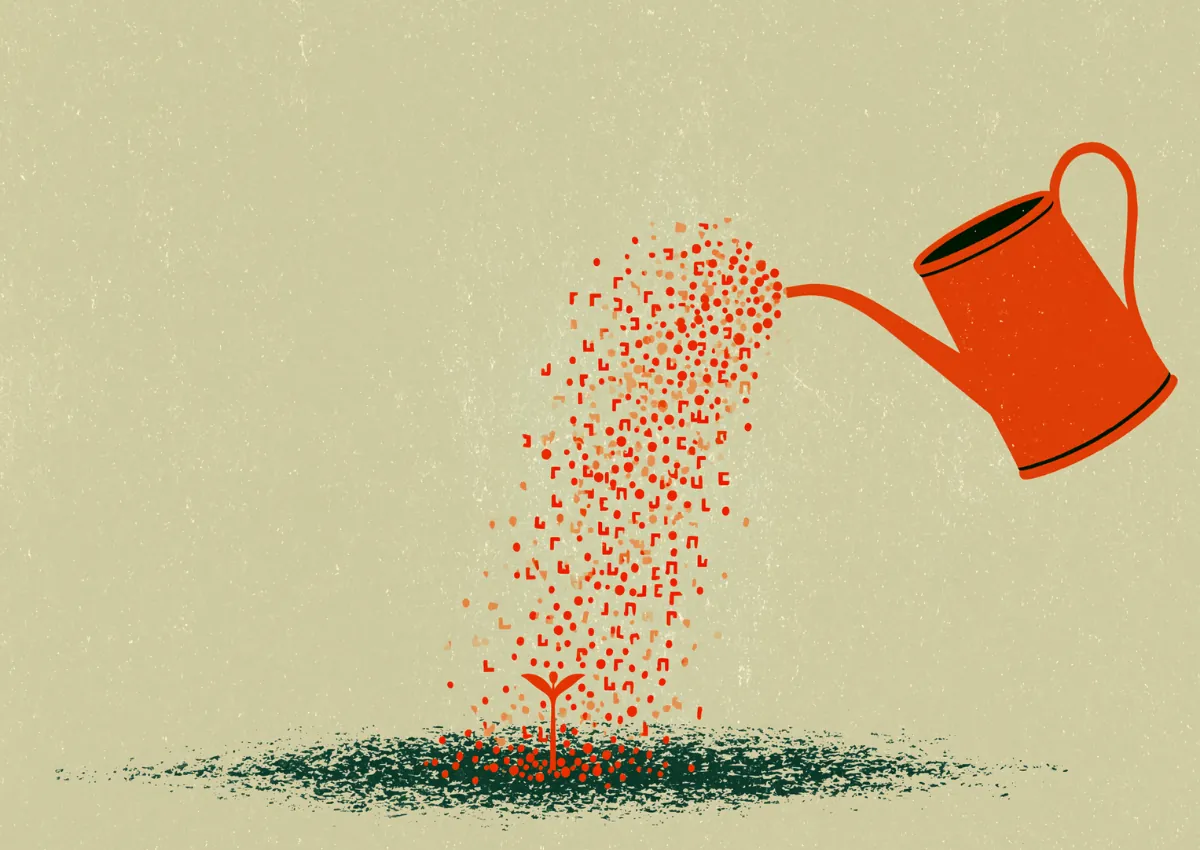
The model that actually works is the opposite. It’s give, give, give, ask. And it’s not charity—it’s strategy. It works because trust compounds.
The Pattern I’ve Seen Work
In eighteen years of SaaS marketing, I watched this play out at Yelp, at StellarWP, at The Events Calendar. The businesses that won weren’t the ones with the loudest ads or the most aggressive funnels. They were the ones that gave away something useful first.
Yelp gave you the ability to find restaurants in your city for free. Not a limited trial. Not a soft paywall. Free. Everyone used it. Then, when they asked restaurants to upgrade to a paid account, restaurants said yes because Yelp had already delivered value.
That’s the pattern.
How I Run This at Hazel Q
- Free playbooks on hazelq.com
- Free field notes every other week
- Free 20-minute consultation calls because you might be a good fit or you might not
- Free newsletter — “How to Talk to Robots” — because people want to understand Claude and I like teaching
Then I sell: one-on-one Claude Code sessions for $150 to $200 an hour. Small group cohorts for $500 to $800 per person. The book I’ve been writing.
The people who buy? They buy because they already know I can do the thing. They’ve felt it for free first.
Why It Works Better Than the Alternative
Free content doesn’t cost you revenue—it builds it.
The alternative is the sales funnel where every step charges money. Free trial, then you see a paywall. Free webinar, but the good part’s behind a registration form. A blog post where the first paragraph is helpful and the rest is gated.
I get it. You’re trying to capture attention. You’re trying to grow an email list. You’re trying to qualify leads. But here’s what actually happens: it’s friction. And friction kills momentum.
The people who need what you’re selling already trust you by the time you ask. They’ve read your free stuff. They’ve used your free tool. They’ve gotten on a free call with you. You didn’t need to trick them into an email address. They gave it to you because they wanted more.
The Real-World Version
This works for literal products too. Ube MKE, my cookie bakery, does this without really thinking about it. We show up at farmers markets and hand out free samples. Not a sample size that makes your mouth happy—a full-size cookie that costs us money to make and give away. Someone takes a bite. They try the purple yam. They buy a box for a birthday party. Then they’re a customer for life.
That’s not charity. That’s math.
Free stuff works because it answers the question your customer’s actually asking: does this work? Can I trust this person? Once you’ve answered that, asking for money feels reasonable.
How to Do This in Your Business
-
Give something genuinely useful. Not a “free trial” that leads to a paywall. Not a “free webinar” where you sell the whole time. Something that stands alone. A checklist. A template. A playbook. A consultation. Time. Attention. Something that makes the other person’s work easier.
-
Give it three or four times before you ask. Three free resources, then you’ve earned the conversation. Three consultations or free calls or piece of content, then the ask doesn’t feel random.
-
Make the ask clear when it comes. Don’t bury the paid offer. You’ve built trust. You can just say “here’s what I sell.”
-
Measure differently. Stop measuring on “how many people did we convert on the first touch.” Start measuring on “how many people know what we do and trust us enough to take a call.”
Trust is the only thing that compounds in marketing
A blog post stays useful for years. A free template gets forwarded. A good consultation call turns into a referral. Everything else resets to zero.
This takes longer. You can’t scale it with paid ads alone. But it compounds.
The Opposite of Noise
Here’s what it’s not: it’s not weak marketing. It’s not “we can’t afford ads.” It’s not settling for low visibility. The businesses that do give-first marketing aren’t invisible. They’re everywhere in their space. They’re just reaching people with something valuable before they ask for money.
It’s not less aggressive than the sales-funnel approach. It’s differently aggressive. More patient. More trusting of what happens when you deliver value first.
In 2026, most of your competitors are still stuck on the ask-ask-ask model. It’s noisy. It’s exhausting. It doesn’t work. And if you flip it—if you give first and ask later—you’ll stand out because you’ll be one of the few businesses that respects people’s attention.
That’s worth something. It’s worth money, actually.
How to Talk to Robots
The newsletter. Weekly. AI that makes sense. Marketing that doesn't suck.